About The Mission
The Emirates Mars Mission aims to draw a clear and comprehensive picture of the Martian climate, which will give scientists deeper insight into the past and future of our own planet as well as the potential of life for humans on Mars and on other distant planets.
The Hope Probe scientific objectives
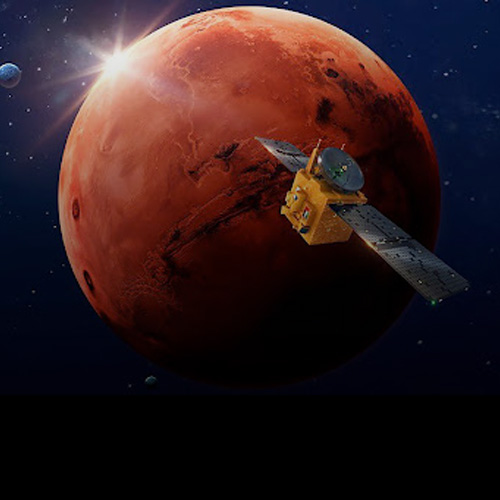
- Integrate with the global Mars science community on key questions that no other mission has addressed
- Study why Mars is losing its upper atmosphere to space by tracking the behaviour and escape of hydrogen and oxygen, the building blocks of water
- Investigate the connection between the lower and upper levels of the Martian atmosphere
- Create the first global picture of how the Martian atmosphere changes through the day and between seasons
- Observe weather phenomena, such as dust storms, changes in temperature, and how the atmosphere interacts with the topography
- Reveal the causes of Martian surface corrosion
- Search for connections between today’s weather and the ancient climate of the red planet
- Integrate with the global Mars science community on key questions that no other mission has addressed
- Study why Mars is losing its upper atmosphere to space by tracking the behaviour and escape of hydrogen and oxygen, the building blocks of water
- Investigate the connection between the lower and upper levels of the Martian atmosphere
- Create the first global picture of how the Martian atmosphere changes through the day and between seasons
- Observe weather phenomena, such as dust storms, changes in temperature, and how the atmosphere interacts with the topography
Strategic Objectives
- Leverage UAE private sector
- Train and prepare UAE capabilities
- Establish international partnerships
- Develop academic engineering and scientific programs
- Transfer knowledge and know-how
Mission Implementation Goals
- Design a unique mission and should aim for advances in fundamental science and demonstrations of technology
- Educate through outreach programs
- Sustain the UAE's outer space exploration program
- Contribute through UAE engineers and scientists
- Develop the science and technology commercial sector
- Create sustainable science and technology initiatives
Science Objectives
- Understand the origins and evolution of water-rich asteroid
- Assess the resource potential of asteroids
- Prepare the way for future asteroid resource use
- Reveal the causes of Martian surface corrosion
- Search for connections between today’s weather and the ancient climate of the red planet
For more details about the Emirates Mars Mission, visit
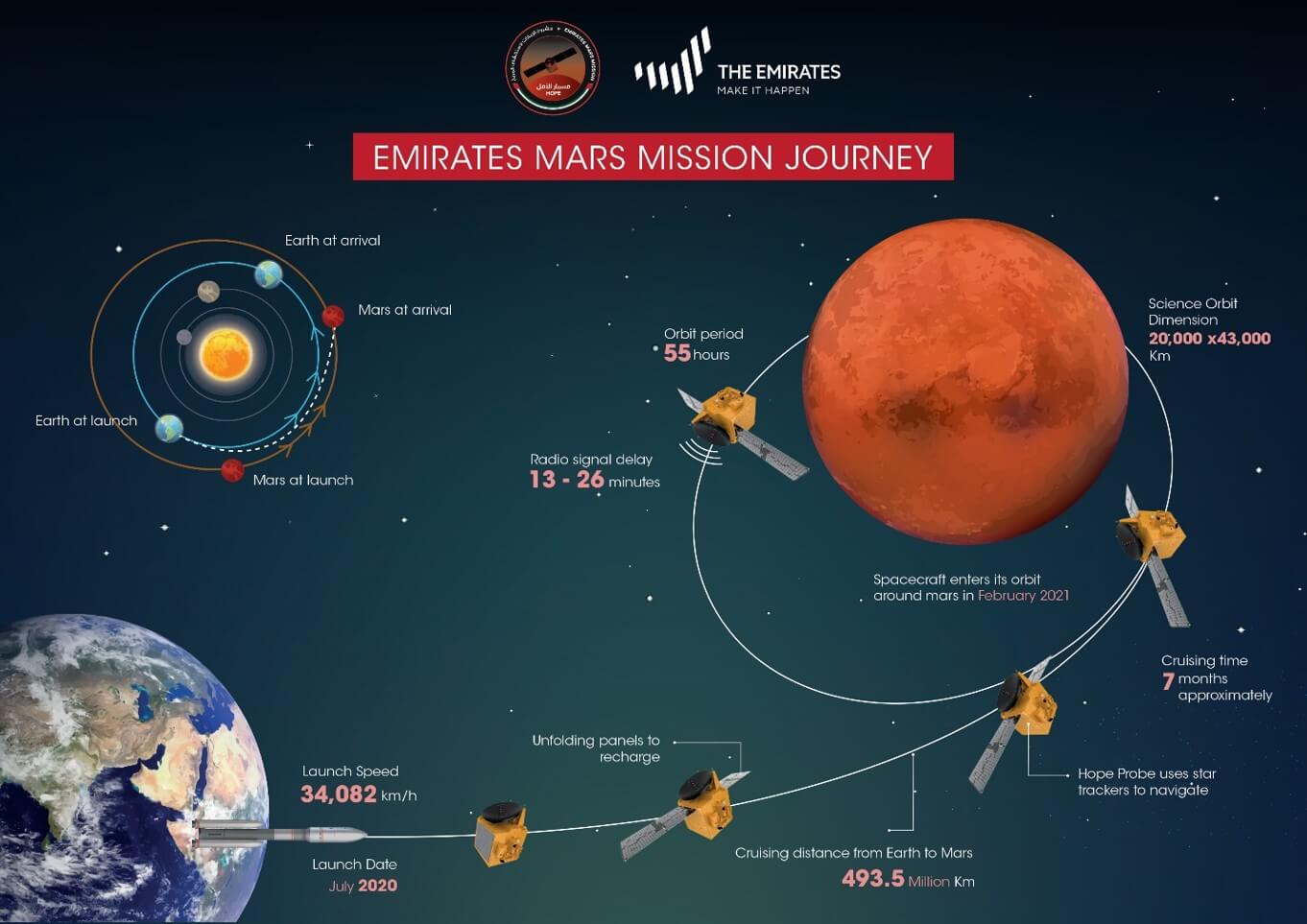
Emirates Mars Mission - Hope Probe